The very best travel suggestions for Sarajevo
Overwhelmed, I turn around. Had not I simply been walking through the spruced-up Ferhadija purchasing road, with its Austrian-style coffee houses and Western style chains? And currently, with every action, I seem like I’m diving right into a different cosmos.
The bazaar has actually dominated the old town considering that Ottoman policy. The pleasant smell of shisha cigarette fills the air, steaming coffee is carried past me on ornate copper trays, and the muezzin calls for prayer. Practically every profession still has its place in the network of streets and yards.
At the threshold between the town hall and the old town, 2 worlds satisfy, yet this is nothing uncommon in the funding of Bosnia-Herzegovina (www.sarajevo.travel ), since below societies and religious beliefs, periods and architectural designs as well as war and peace meet on almost every edge.
What to see in Sarajevo
In the old town area alone, 4 religious beliefs are represented with places of worship – special in Europe. The Roman Catholic Sacred Heart Basilica stands at the entryway gateway. The heart of Bascarsija is the Gazi Husrev-Beg Mosque, whose namesake is put to rest in a tiny mausoleum next door (Sarači).
To this particular day, he is thought about the papa of the city, having actually formed it with cultural visibility and good deeds as early as the 16th century. Simply a couple of actions away, sheltered by thick trees, stands the old Sephardic synagogue, which today houses the Velika Avlija Museum, which tells the tale of the Jews in Sarajevo.by link https://app.mainewinetrail.com/place/jbBEDAS8/hostel-franz-ferdinand-sarajevo-federacija-bosne-i-hercegovine-bosnia-and-herzegovina website
The old Orthodox church on the northern edge of the Old Town is in a similar way ordinary. Modern and tolerant Sarajevo shed its virtue throughout the battle years in between 1992 and 1995. My feeling that people have actually shut this dark chapter continues until I feel like I’m standing in a pool of blood at the Gradska tržnica market hall (Mula Mustafe Basceskije 4 a).
Wherever many people lost their lives in explosive assaults, the harmed concrete was not eliminated yet dipped in red paint. Stumbling blocks, called ‘roses,’ were placed there.
The Galerija 11/07/95 Gallery likewise sees itself as a stumbling block. It exists discreetly in the shadow of the sanctuary and take care of the Srebrenica bloodbath, and specifically its consequences. Basic yet deeply relocating photos, several brief movies, and an audio overview clarify the national trauma (Trg Fra Grge Martića 2).
As the hustle and bustle of the old town spits me out again, I locate myself standing in front of the mighty Vijećnica. The bulky, gently decorated old town hall, integrated in 1894, is one of the most essential buildings in the pseudo-Moorish design. It accomplished prestige two times: in 1914 throughout the assassination attempt on Franz Ferdinand and his other half Sophie, which triggered the First World War. In 1992, it was itself so terribly damaged that its repair had not been finished until 2014.
Why the scars of war were covered up here of all places becomes clear in the entrance hall: the sunlight refracts in the glass, flower-decorated dome and lets the elaborately crafted accessories and decorated columns shine (Zmaja od Bosne 8 b).
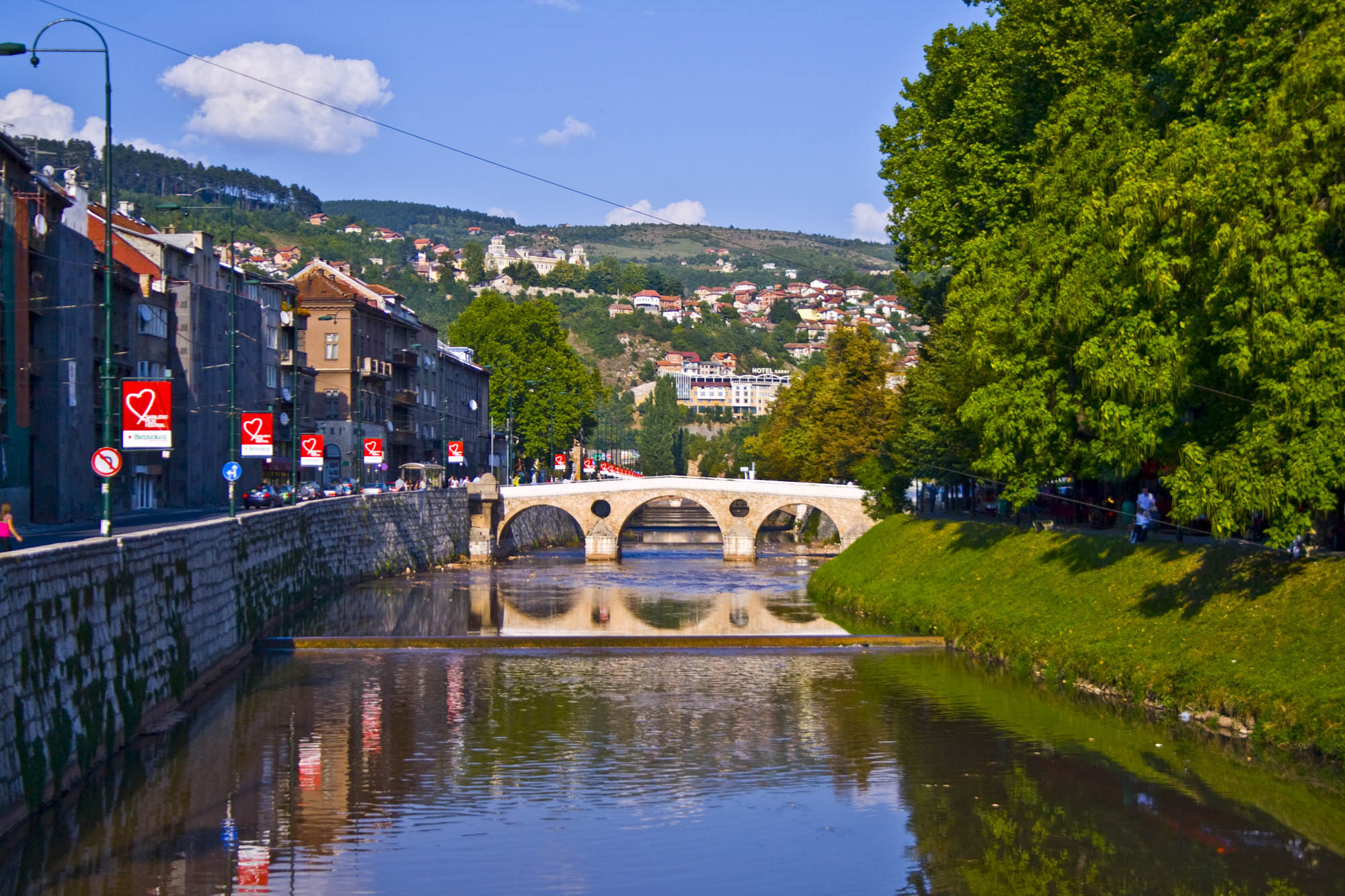
Right outside the door is the Ottoman Light Bridge, which leads over the Miljacka River into an additional globe. Possibly the one that many very closely mirrors contemporary life: South of the river, residential structures and small stores cling to the slope of the neighborhood mountain, Trebević. Steep streets and alleys wind upwards up until they pave the way to fields, forests, and a walkway that leads to the 1984 Olympic Bobsleigh Track 3.
For virtually 2 kilometers, it goes through the forest on the hill plateau. I follow the graffiti-decorated network to the beginning point, which converges a preferred hiking trail to the Trebević search point. Mounted by the carefully moving peaks of the Dinaric Mountains, the advanced Avaz Twist Tower marks the brand-new Marijin Dvor business and government district to the west.
Like a historic counterpoint, the yellow stronghold of Žuta Tabija overlook the old town. From up below, one can just presume that this valley is home to more than just architectural contrasts.
The best places to eat and drink in Sarajevo
Buregdžinica cavity makes the very best smoke pastry snails filled with spinach, cheese, or meat. The cast-iron baking frying pans leave the stone stove practically every minute (Mali Bravadžiluk 2). Bosnian ravioli in sour lotion, cevapcici, or the meat stew muckalica are offered at the riverside dining establishment Inat kuća (Veliki Alifakovac 1).
The small Klopa, with its open kitchen area and airy wooden interior, lies in a back courtyard of Ferhadija. The menu also caters to vegetarians and allergic reaction patients (Ferhadija 5).
The Barhana pub serves food and rakija (a Bosnian fruit brandy) up until the early hours on two floors. Rakija is served right here in 25 different selections. Walnut and honey (Đulagina čikma 8) is especially scrumptious.
Accommodation in Sarajevo
Found in a peaceful backstreet, the boutique hostel Franz Ferdinand inhabits a flooring of an old structure with urban-style dorm rooms and personal areas (Jelića 4; dorm from euro10.90, double from euro15.90).
A view of the sanctuary, a huge balcony, and an Airbnb host that swiftly ends up being a good friend: Adna is an engineer with an interest for revamping old furniture. In her Chic Woody House, guests can remain in her works (euro50 per night).
The Hotel Europe delights in a picturesque area in between the Old Town and Miljacka. Some areas supply views of all 4 churches. Facilities consist of a spa and the stylish ‘Viennese Coffee shop’ (Vladislava Skarića 5; double spaces from euro133).
Arrival
Lufthansa flies direct from Munich, Eurowings from Cologne/Bonn and Stuttgart. Austrian Airlines connects with a transfer in Vienna.